Your assets stay on your device.
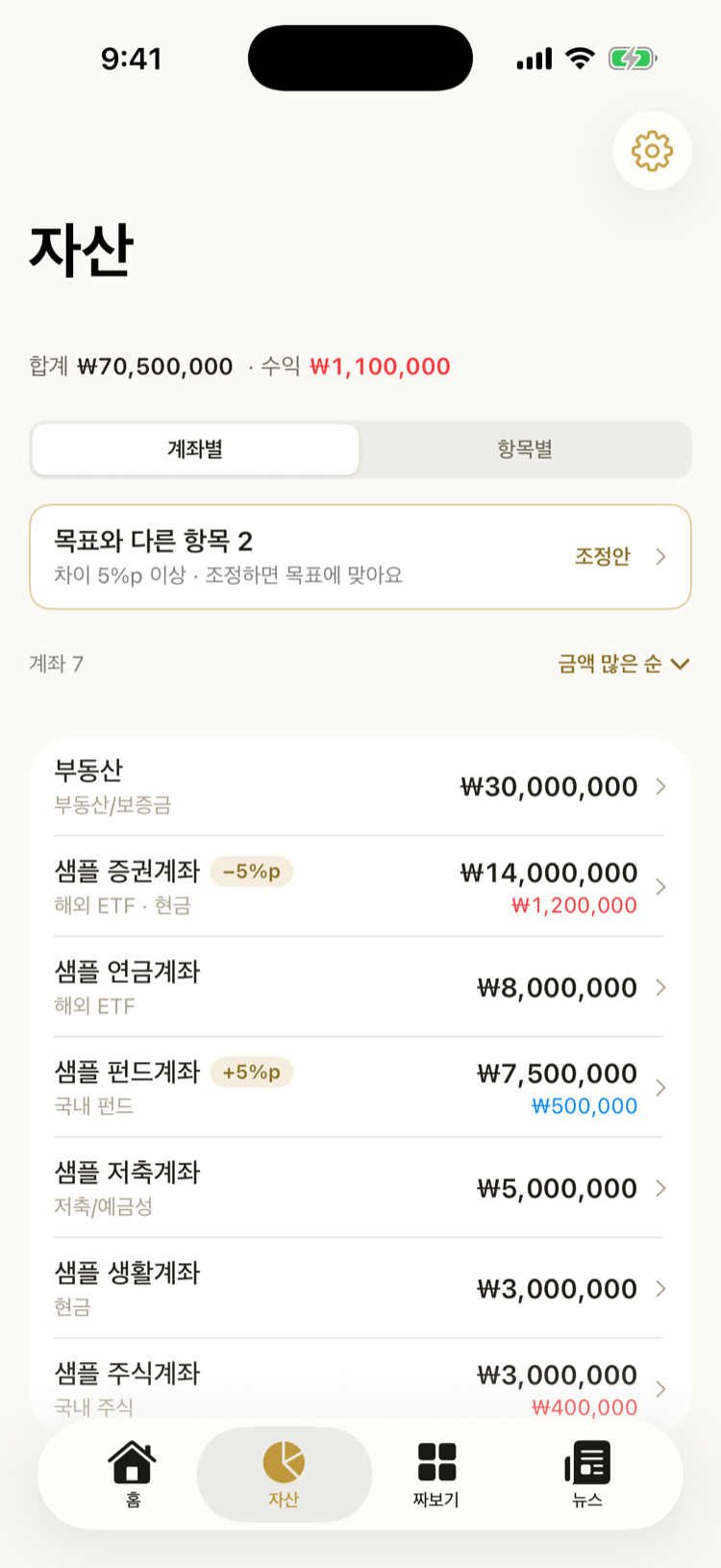
See accounts scattered across brokers in one place, and how far they sit from the mix you set. No sign-in, and no asset data leaving for a server. Start with the sample, type your own in, or paste a screenshot from your brokerage app.
iPhone · iPad · Mac · Android · free

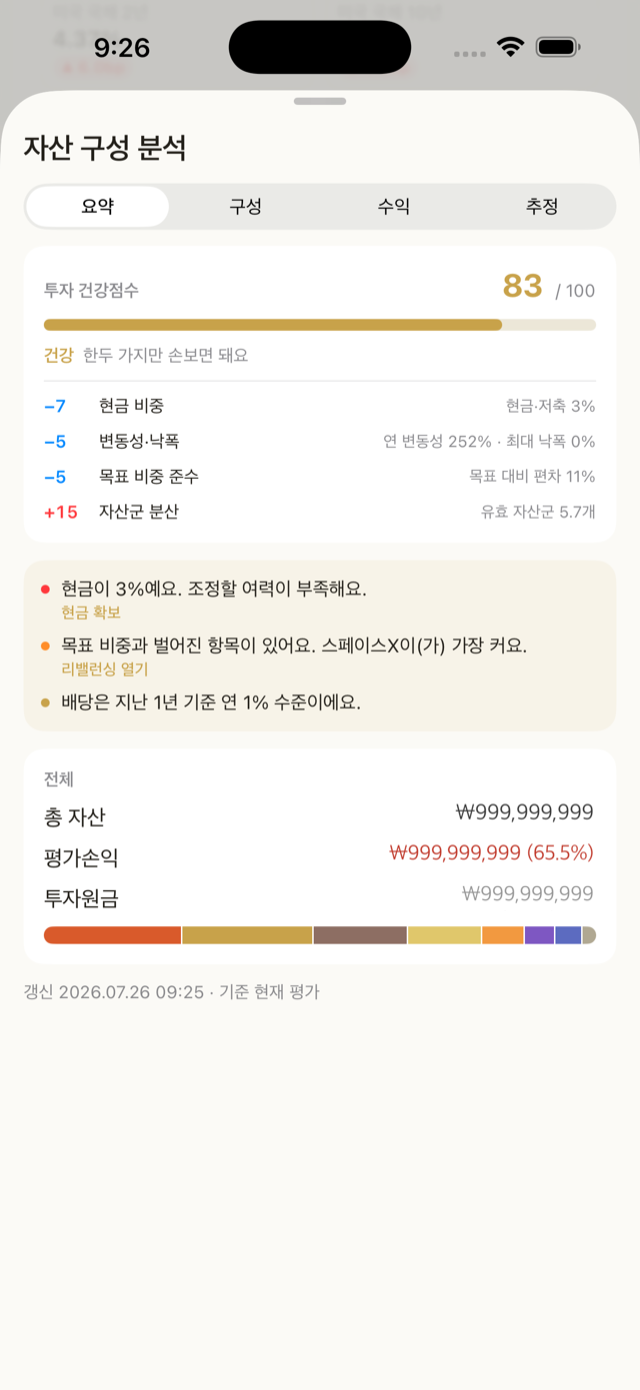
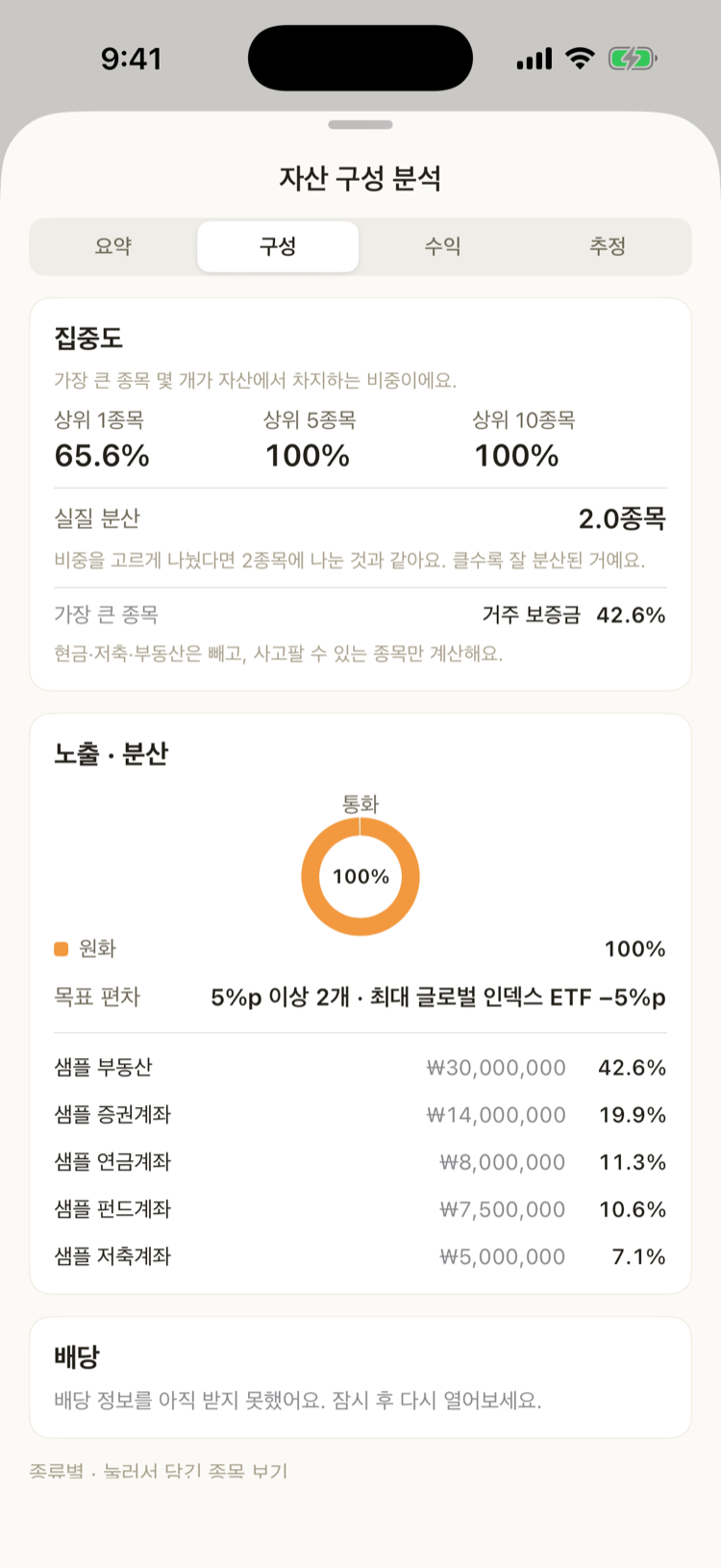
Golgoru is a personal asset tracker for iPhone, iPad, Mac and Android. It gathers what you hold across separate accounts into one screen, and works out the gap between the weights you set and what you actually hold — so you can see what to move first.
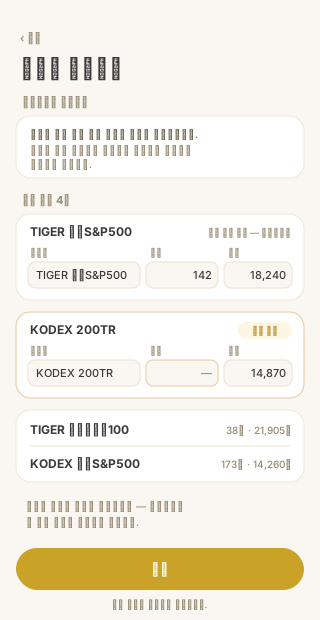
You type your accounts and holdings in. Paste a screenshot from your brokerage app and it reads the names, quantities and average costs for you to check and save. What you entered is shared across the iPhone, iPad and Mac on your Apple account. There is no account to create and nothing to sign in to.
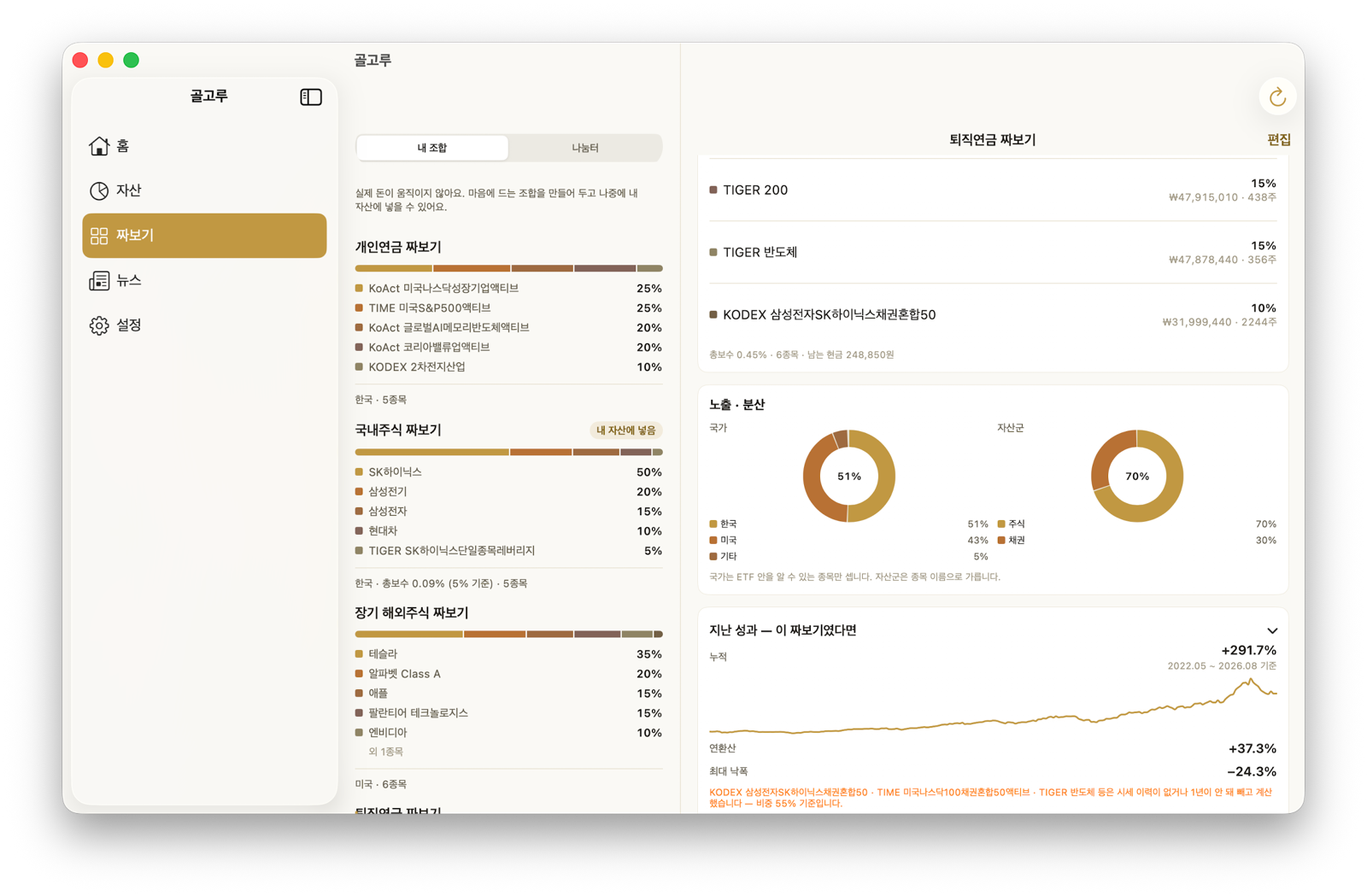
From 2.0 you can also build a mix you have not bought yet and try it out, and use the community to see what other people put together or share your own. Only the holdings and weights go up — never the amounts or the accounts.
Golgoru is made by indus96, an independent developer. Questions: [email protected]
It does not. The public app has no sign-in and every feature works without an account. The Google Sheets read-only link that version 1.0 had (a single spreadsheets.readonly permission, reading a sheet you pointed it at) was removed in 1.2.0.
What happens to your data is in the privacy policy; how to use it is in getting started.
We do not own your data, the numbers are worked out on your device, and sharing carries the shape only. Everything else sits on those three.
The app does not own your data. It lives on your device and in your own iCloud sync — never on our servers.
Amounts, currency conversion and weights are all calculated inside the app. Your asset data is not sent anywhere.
Posting to the community carries the holdings and weights. Amounts and accounts stay behind, and you appear under a nickname.
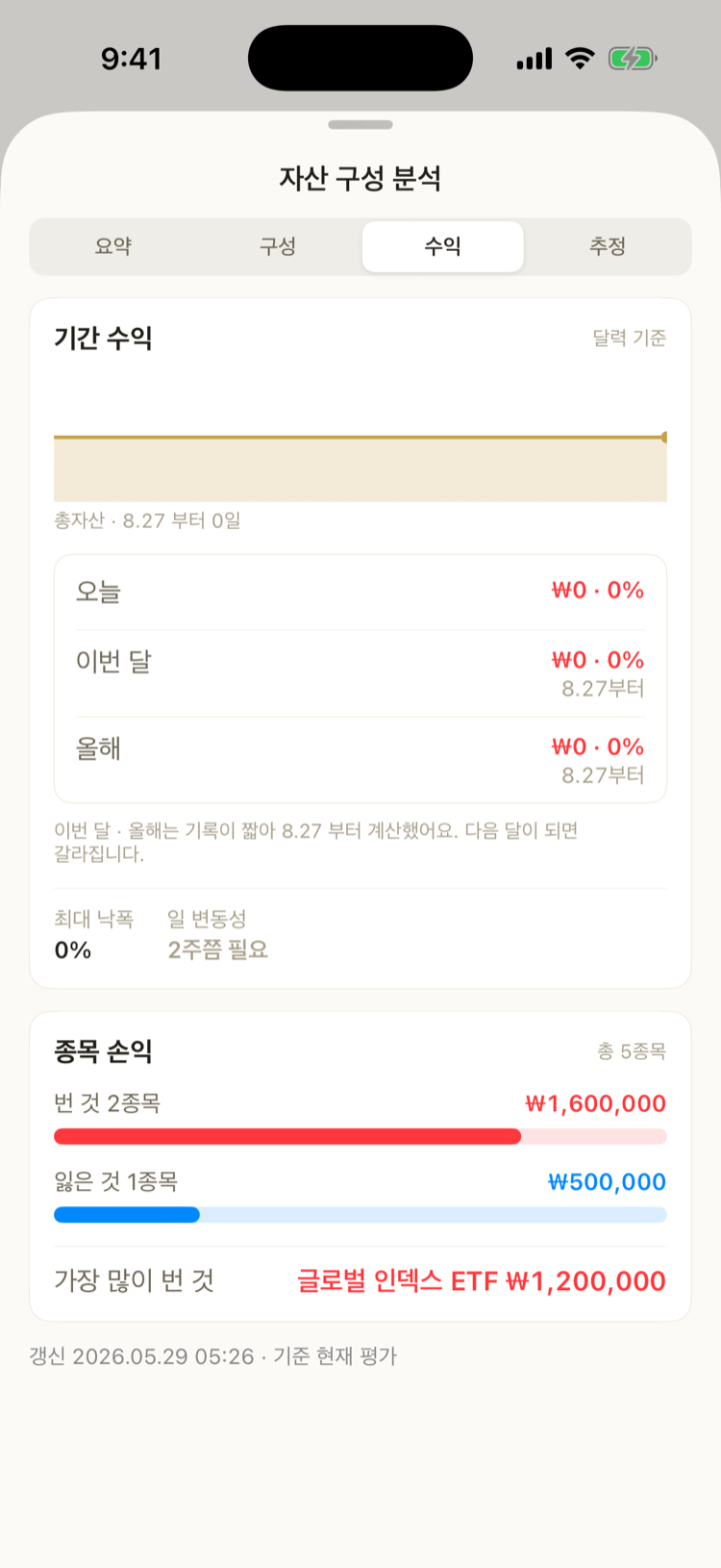
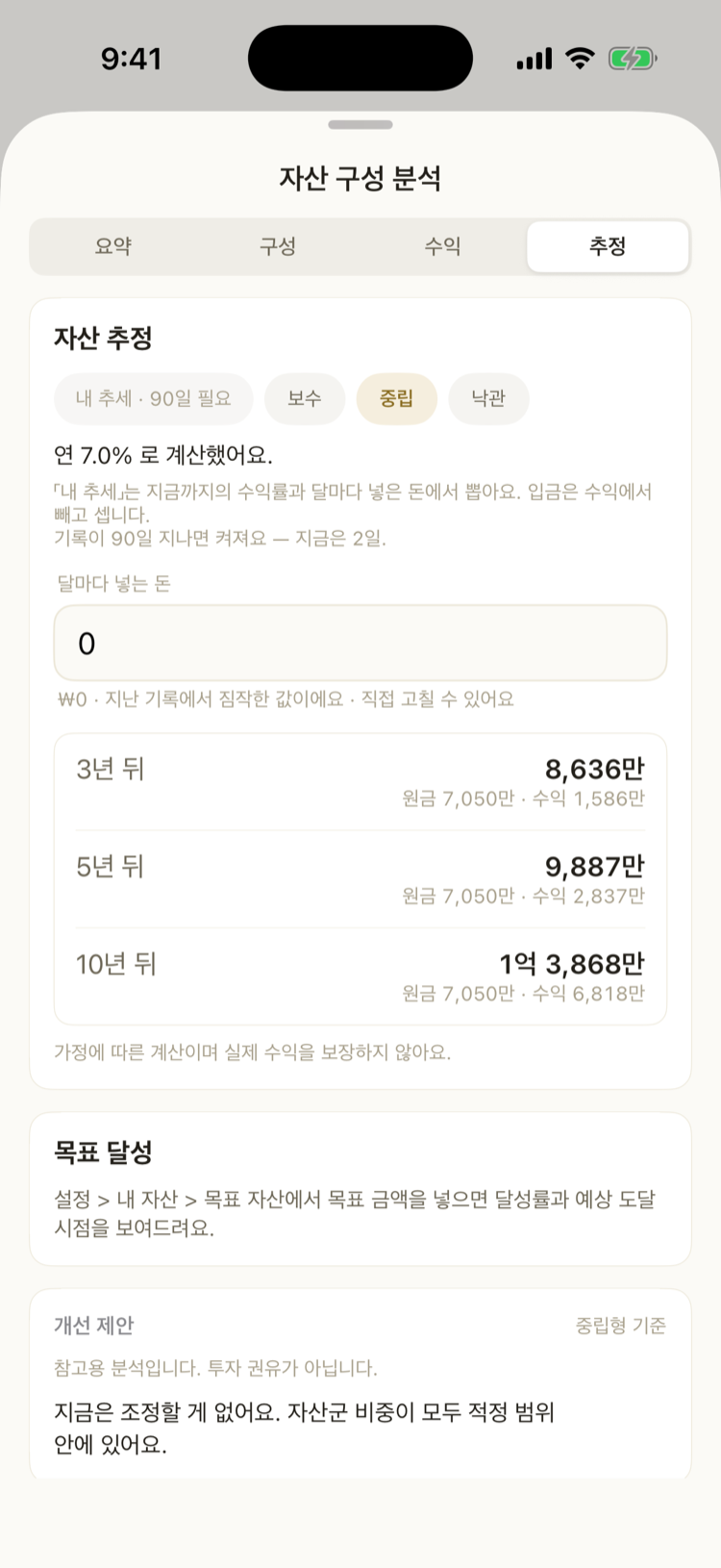
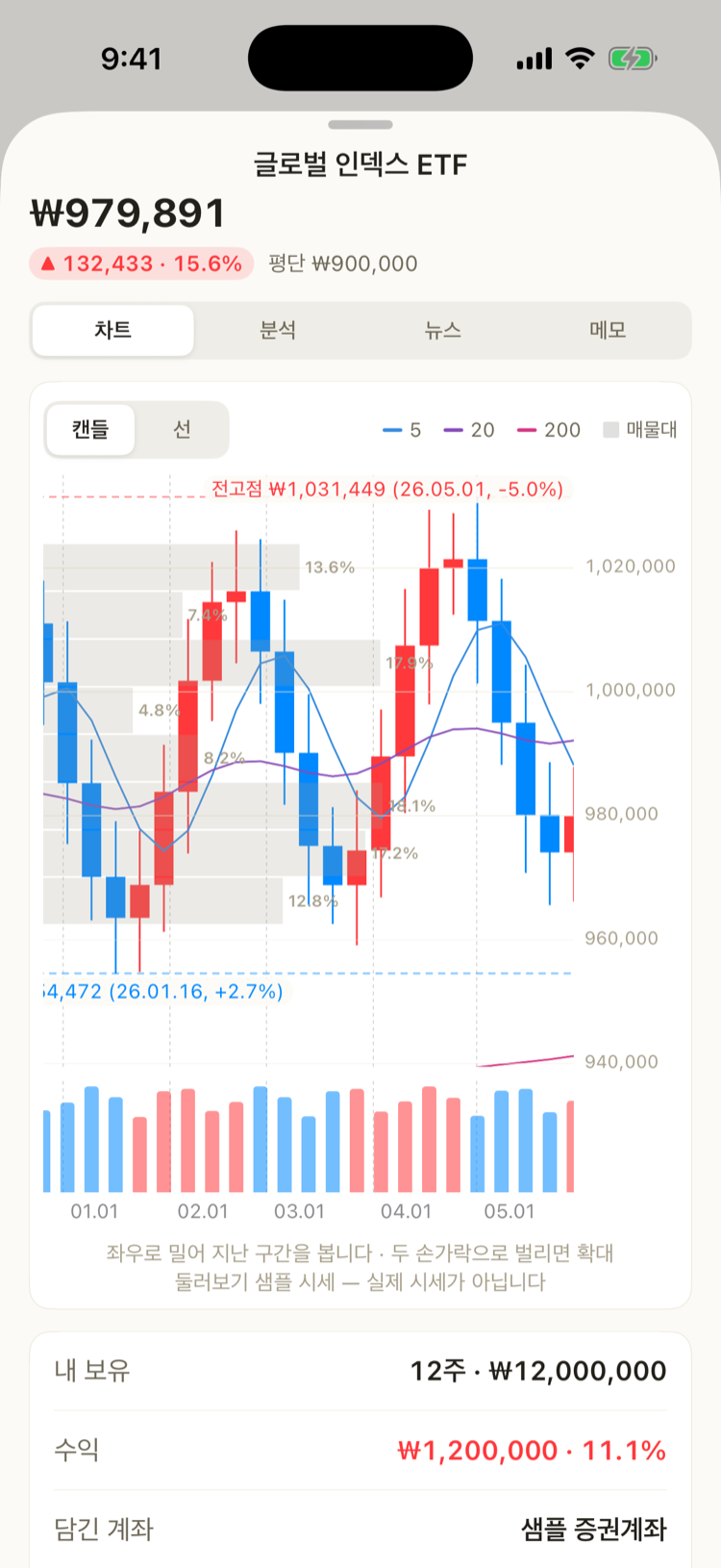
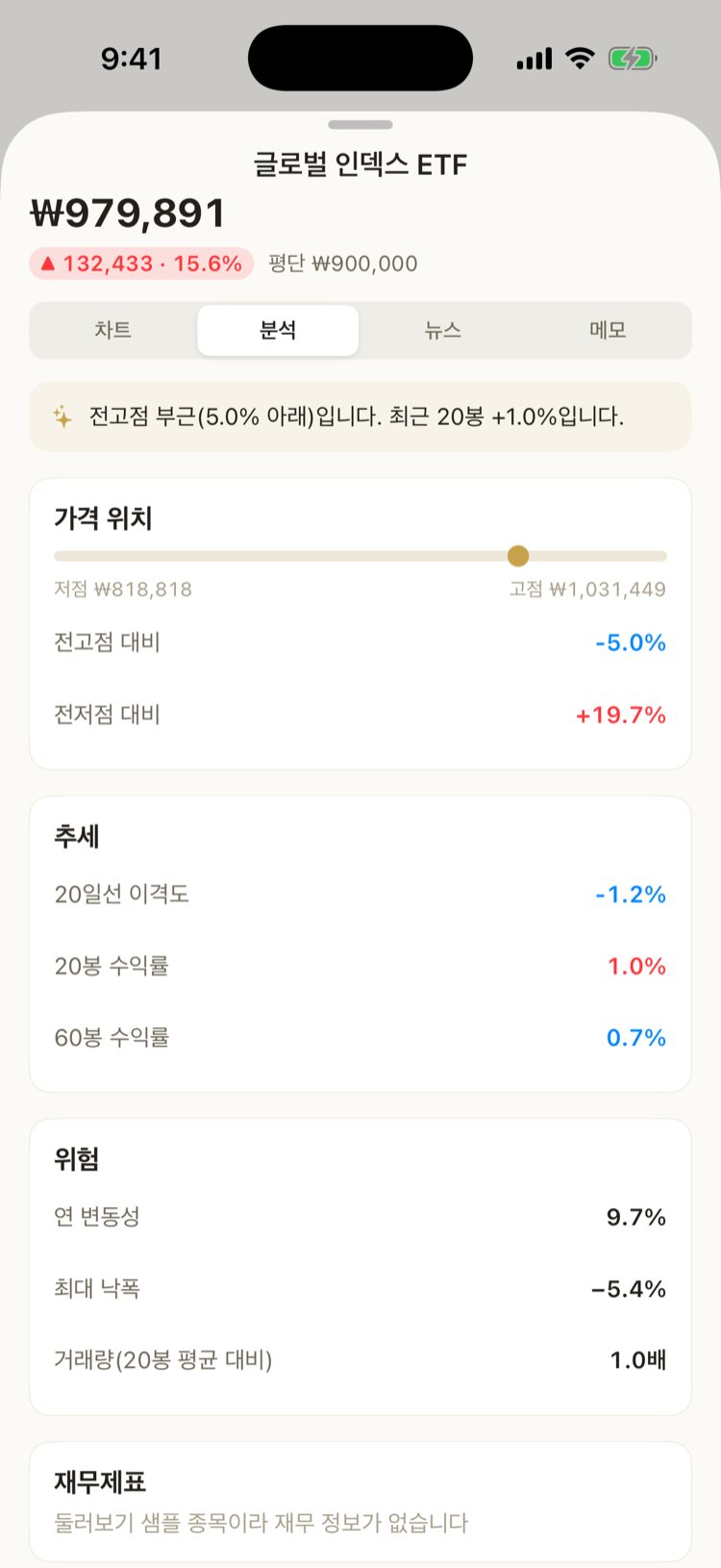
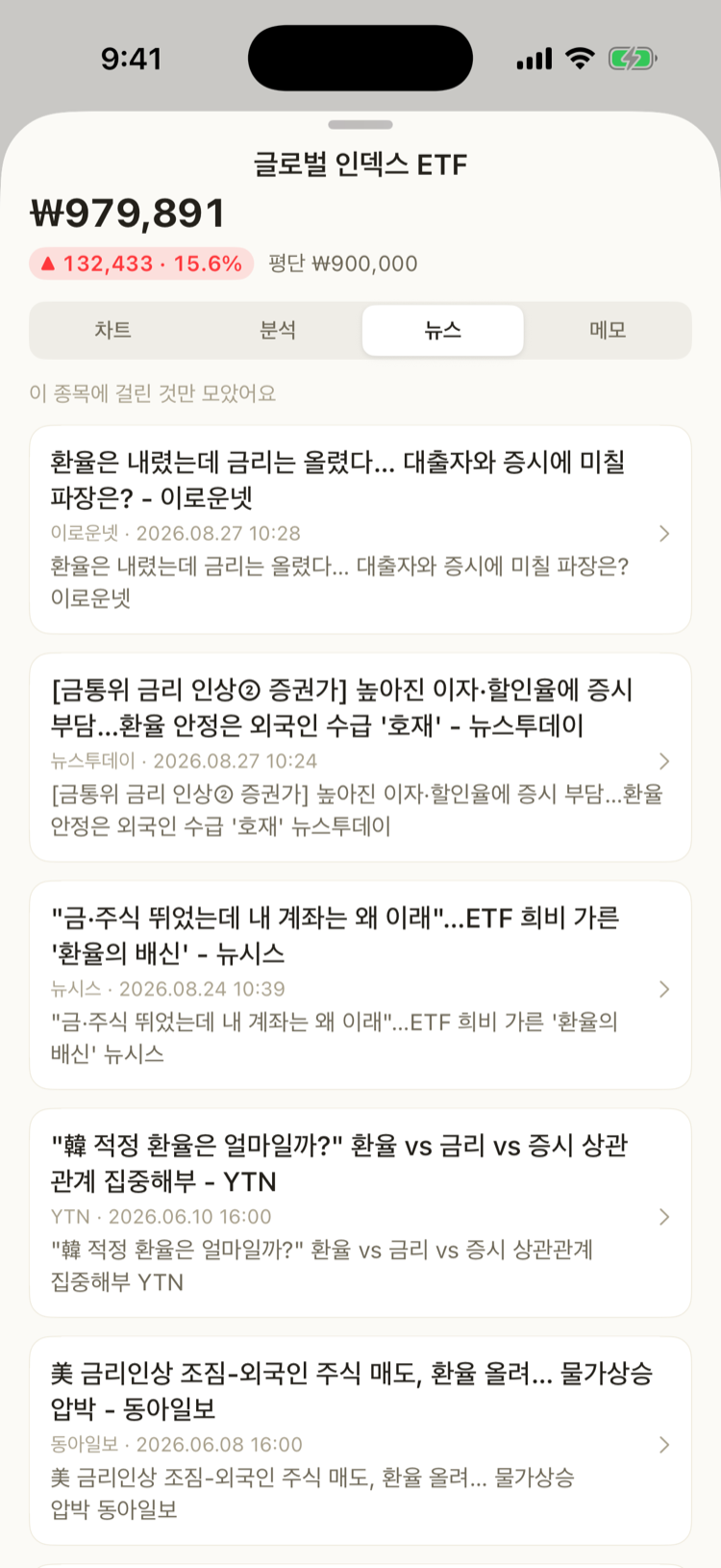
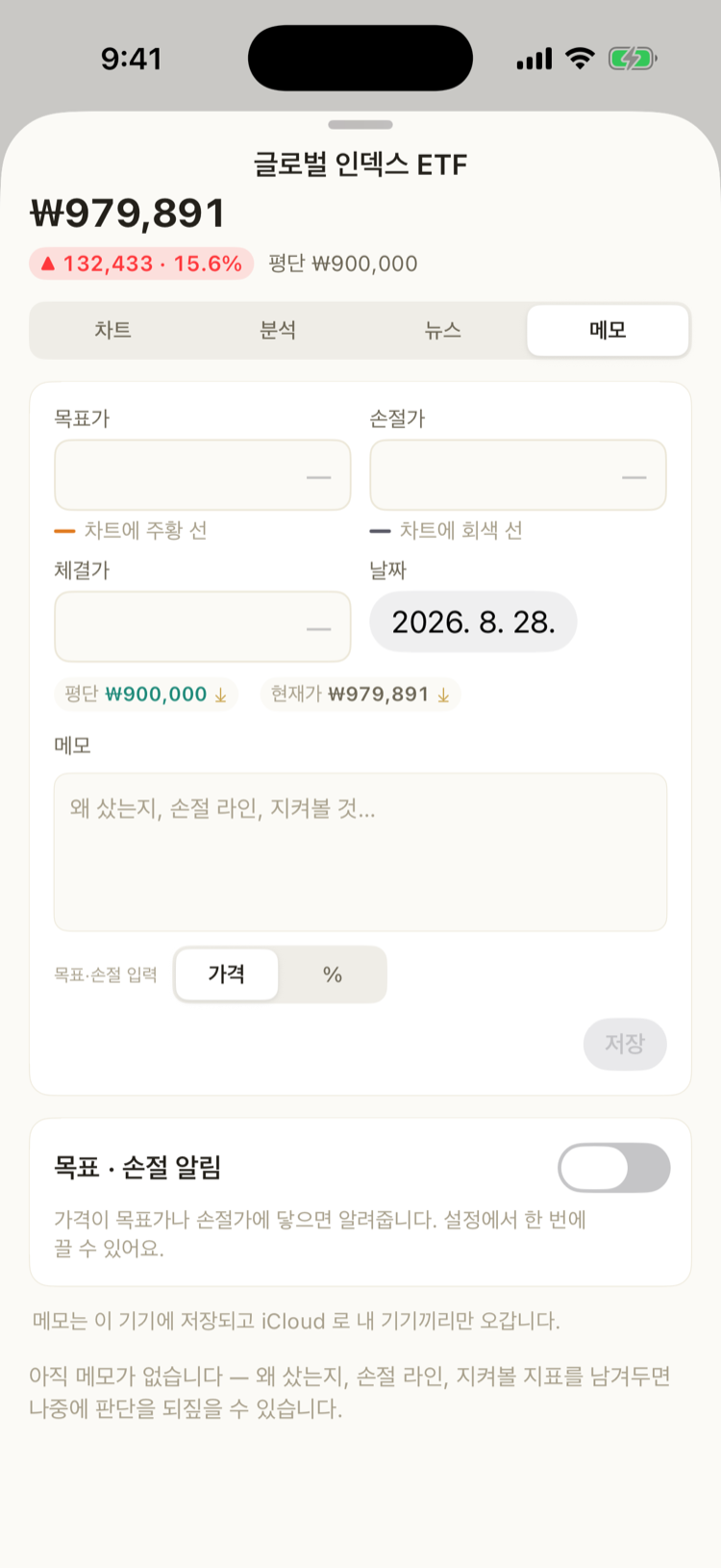
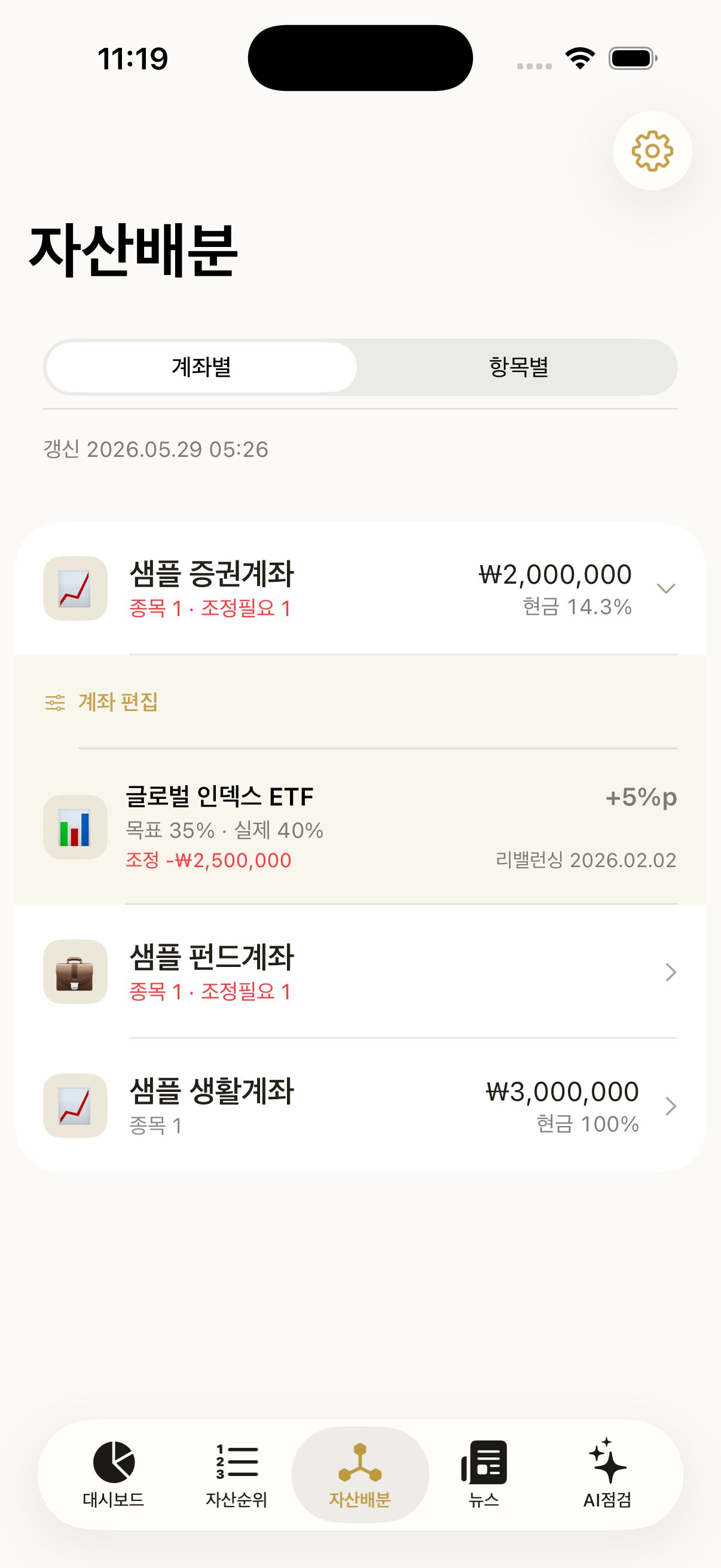
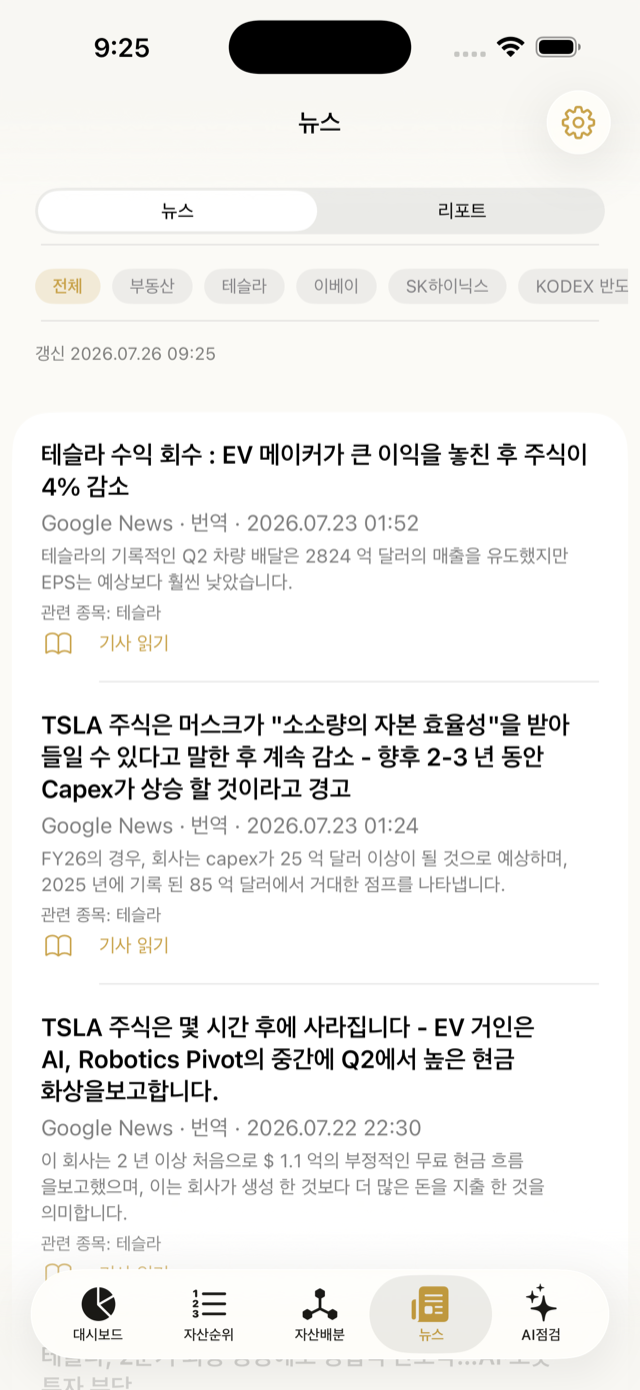
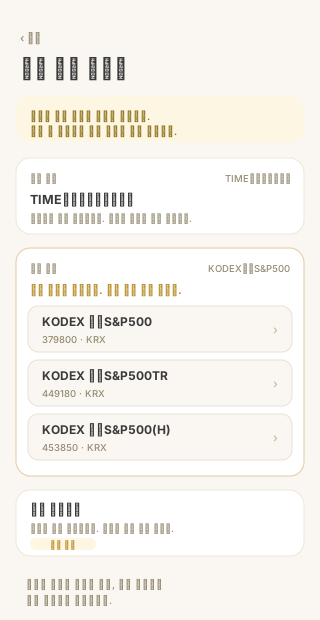
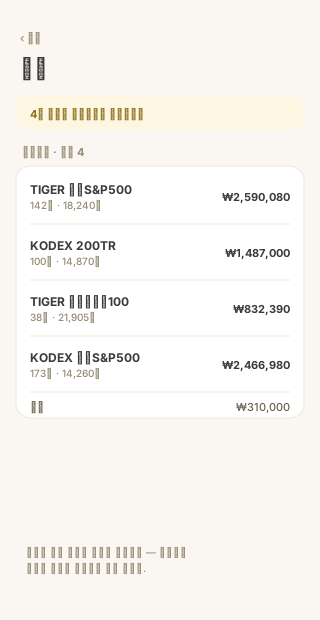
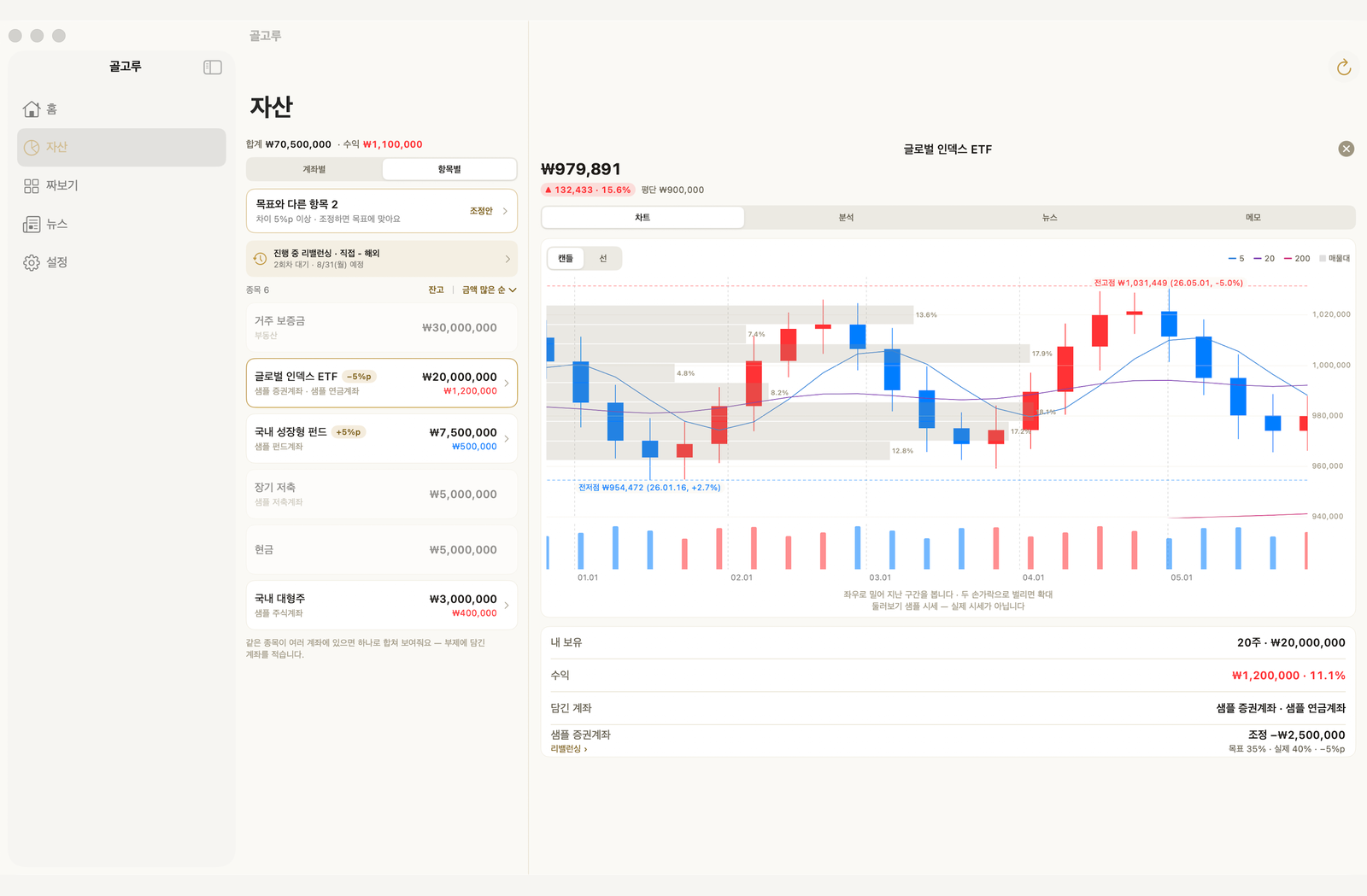
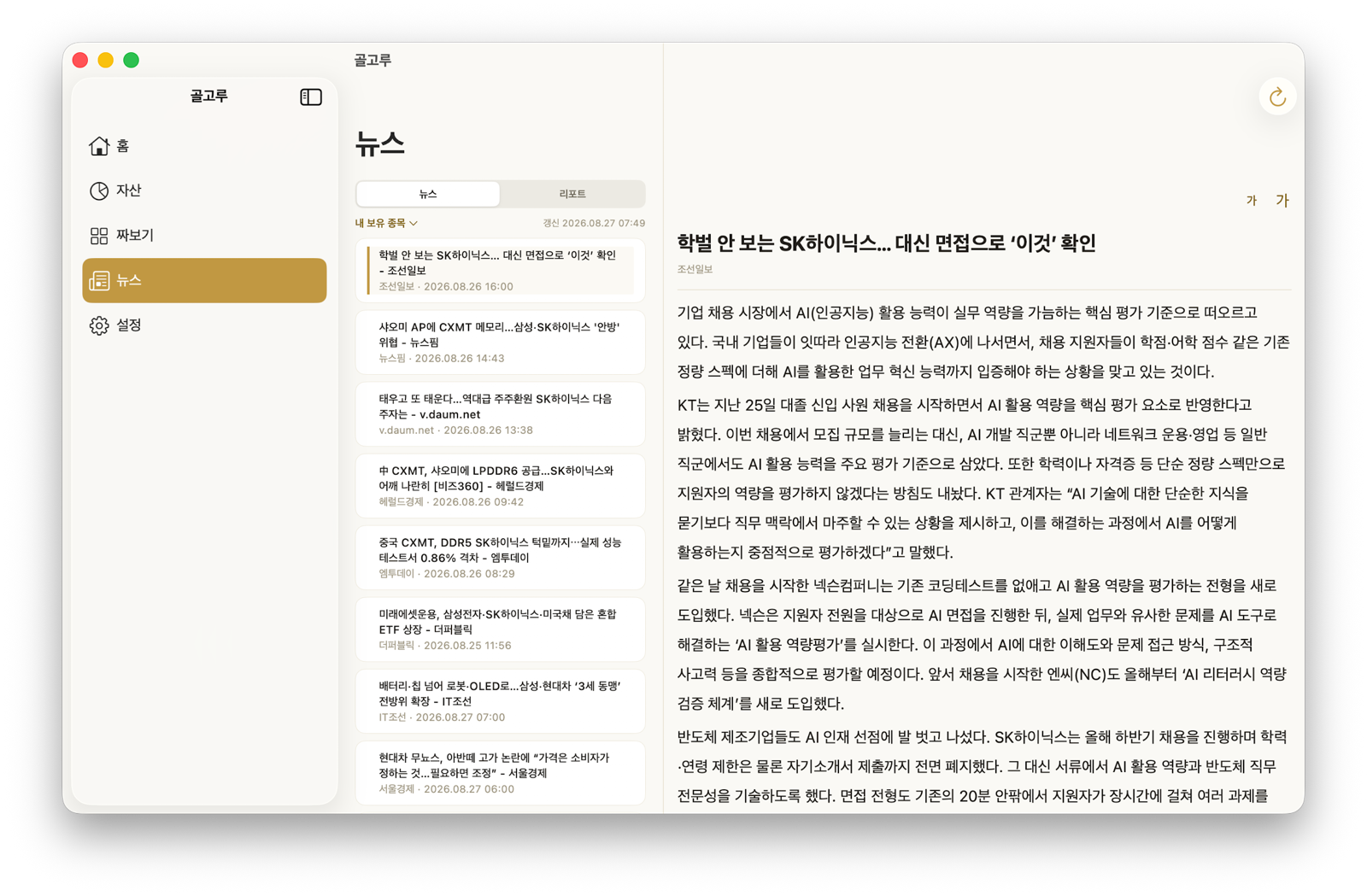
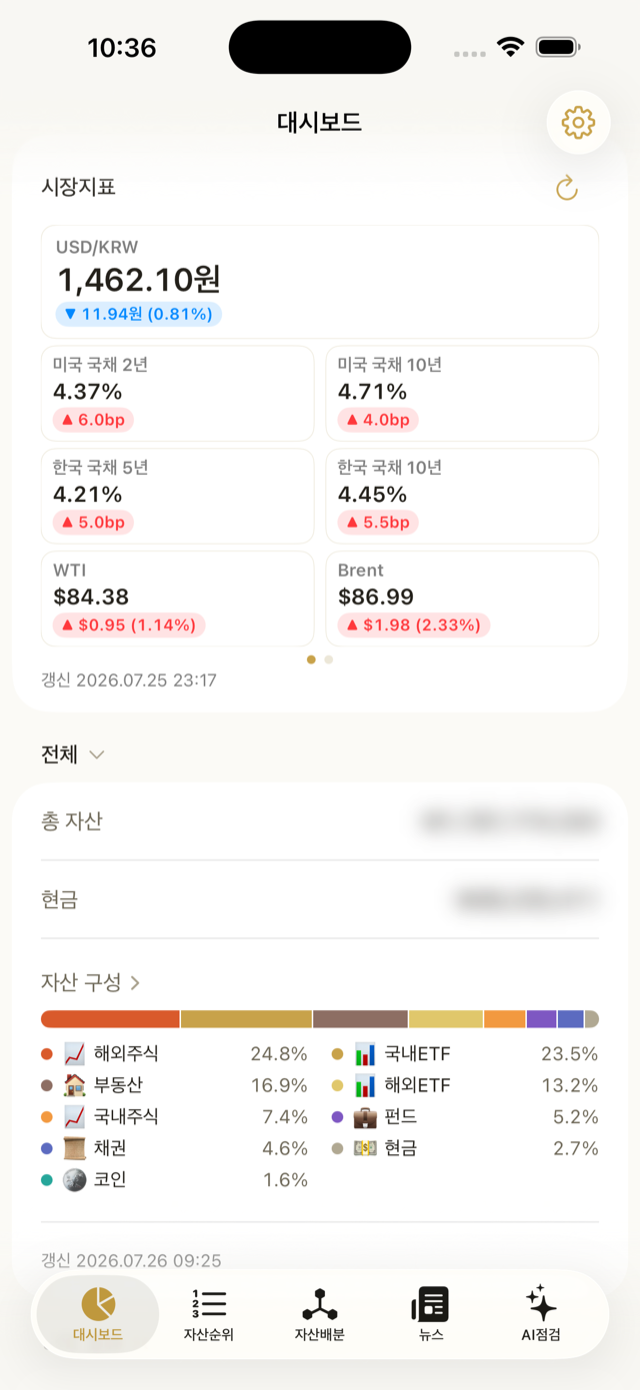
These are the actual screens, with example numbers. Each section links to its page.


iPhone, iPad and Mac are one SwiftUI codebase. A narrow screen folds into a tab bar; a wide one opens into a sidebar and multiple panes. No screen loses a feature — the same data just gets more room. These are real screens with example numbers.
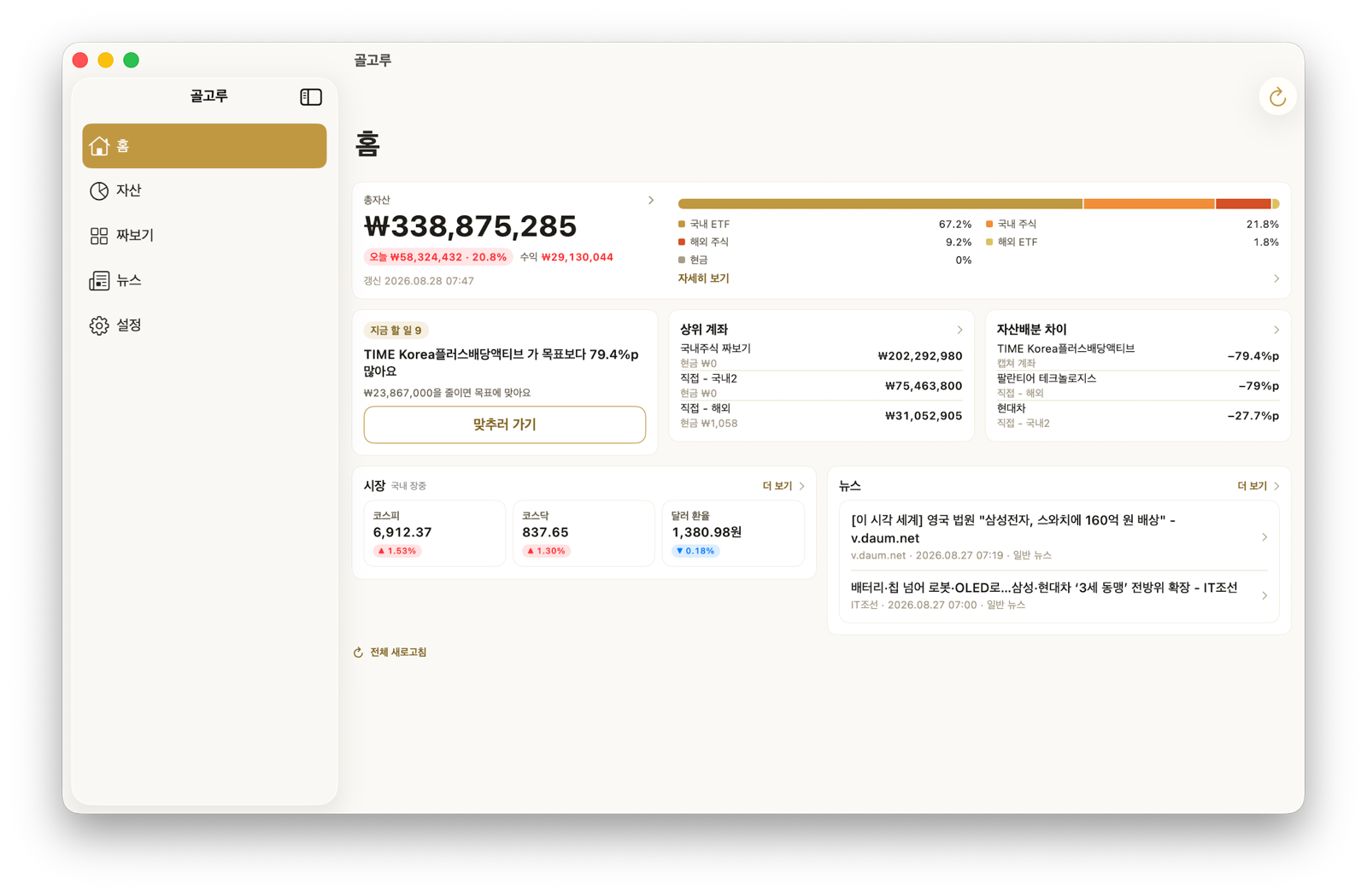
The sidebar is Home · Assets · Build · News · Settings. Home puts what to do now, your largest accounts, the gap to your targets, markets and news into cards under the total — the two lists dropped on the phone come back here. Assets fits the total, the switch, the account count and the sort on one row, and News splits into a list on the left and the article on the right. Holding detail puts the chart large on the left with the numbers beside it. iPad lays out the same way — and the appearance (system · light · dark) is set in Settings.
Start with the sample, no sign-in. When you like it, type your assets in or paste a screenshot from your brokerage app and the holdings fill themselves.